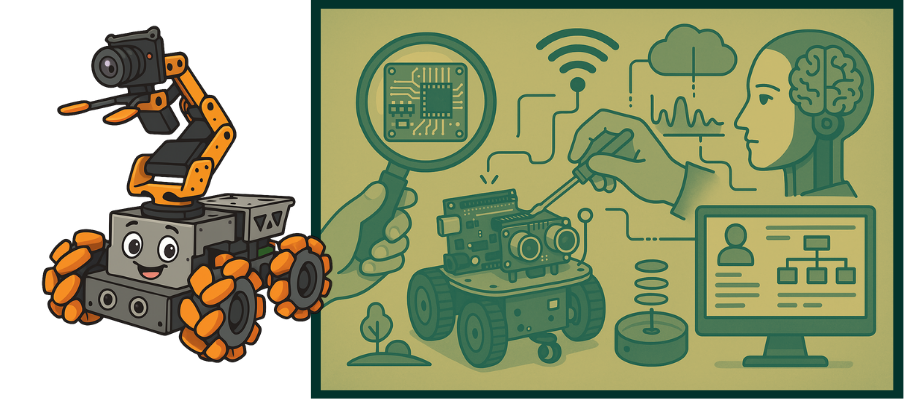
 The goal of the IRAP program is to provide attendees with a broad understanding of robot systems, autonomy and their underlying principles and technologies. This course kicks off with introducing the foundational concepts, technologies, and challenges in designing, developing, and fielding modern autonomous systems.
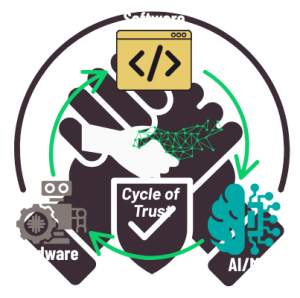 Not all robots have the same level of autonomy. To develop a cycle of trust between human operators and robots, it is important to understand the different levels of autonomy and their impact on design and operation. It is especially important to understand the use of automation in robotics in military and defense domains.
IRAP introduces the specific engineering domains and their role in robotics design and development. Throughout the course, students will experience real-world challenges of designing, building, and deploying robotic systems.
The key outcomes of the program are to enable:
- Breadth understanding of underlying robotics technologies to enable clear insight of technical capabilities and limitations and communicate intelligently on the topic.
- Hands-on technical competency to the level of being able to build a simple robot from commodity components and use the system to achieve an operational goal.
- An understanding of communications technologies and protocols utilized in robotics systems and their various strengths and weaknesses.
- A working knowledge of environmental awareness through the use of multimodal sensors and sensing.
- A clear understanding of the various gradients of autonomy from simple sense-response systems to systems that utilize artificial intelligence to guide autonomous behaviors.
- A “cycle of trust” where attendees better understand the underlying technologies, capabilities, and limitations of a given robotics system to the extent they better understand its capabilities and limitations as part of a human-machine team.